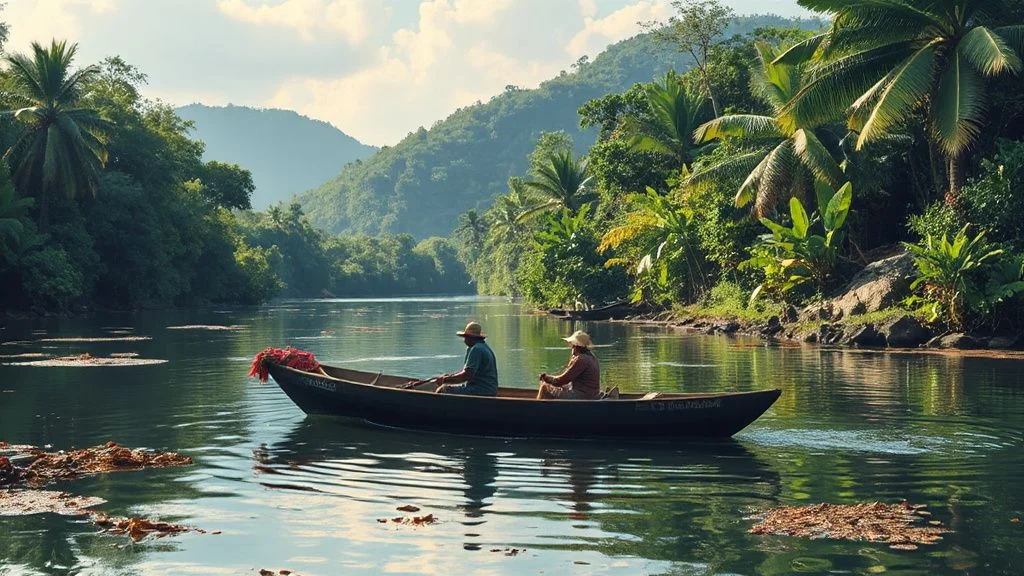
The Lawa river, set in the tropical rainforest of Suriname, is not only a fine natural waterway but a lifeline for the Indigenous population who have depended on it for centuries. The river offers a rich variety of fish species essential to the food and the culture of the local communities. In this article we explore the Lawa river, the fishing methods its residents use and the various fish species caught in these waters.
The Lawa River: An Important Source of Life
The Lawa river flows through one of the most untouched parts of Suriname, the Amazon region. The water is clear and full of life, which makes it an ideal habitat for various fish species. The river is reached by small boats, and local people often use traditional craft to make their way to the best fishing spots. The river is also an important source of drinking water and a route of transport for the Indigenous communities living along its banks.
The Lawa river also plays a crucial part in the ecology of the area. The flora and fauna depend on the watercourse, and the river supports a varied ecosystem essential to the biodiversity of Suriname. Preserving the Lawa river carries great importance for local people, who are working towards sustainable use of this natural resource.
Fishing Methods of Local Residents
The residents of the Lawa river use various traditional fishing methods, adapted to local conditions and to the fish species available. One popular method is line fishing, in which fishers catch fish with a rod or line. That is often done from the bank or from small boats. The method is not only effective but a way of keeping the ecological impact to a minimum.
Some communities also use nets and traps to catch fish. These techniques are effective for catching larger shoals, above all during the spawning season when the fish gather. Local knowledge of the best times and places to fish is crucial to the success of these methods.
Popular Fish Species in the Lawa River
The Lawa river holds a variety of fish species of great importance to the local economy and to local food. Some of the most frequently caught are:
- Pacu: This freshwater fish is popular for its fine flavour and is often caught by the Indigenous population.
- Huluwi: A large species often caught for special occasions. It is a powerful fish known for putting up a fight.
- Catfish: This fish is known for its firm flesh and is often prepared in traditional dishes.
- Pireng: A smaller species often used in local dishes and popular among the residents.
These fish species are not only important to the food of the residents but play a part in their cultural traditions and rituals. Catching and preparing fish is a social occasion, at which families and communities come together to enjoy their catch and to strengthen their ties.
Questions of Health and Sustainability
Although the Lawa river is an important source of food, there are also concerns about the health of its residents because of pollution, caused mainly by illegal gold mining in the area. The use of mercury in mining has led to a raised concentration of toxic substances in the river and in the fish. That has serious consequences for the health of the Indigenous population, who depend on fish as their main source of protein.
The local communities face the challenge of finding a balance between their traditional fishing practices and the need to protect their health. Initiatives have been set in motion to foster sustainable fishing practices and to keep the effects of pollution to a minimum, which is essential to the future of the Lawa river and to the lives of its residents.
What Expats and Tourists Should Know
For expats and tourists wanting to explore the Lawa river and local fishing, there are some important considerations:
- Respect local traditions: The Indigenous communities have a deep relationship with the natural world and with their fishing practices. Take the time to talk with them and to make sense of their traditions.
- Join local initiatives: There are various ecotourism initiatives giving visitors the chance to learn more about fishing and about the culture of local people.
- Be aware of sustainable practices: Avoid buying fish from polluted areas and support local projects working towards sustainable fishing.
Conclusion
The Lawa river is an essential part of life in the Amazon region of Suriname. The fishing practices of local residents are not only a source of food but an important cultural heritage. Protecting the health of this river and of its community from pollution and uncontrolled exploitation is crucial. By respecting local traditions and supporting sustainable practices, visitors can contribute to preserving this fine and vital waterway.