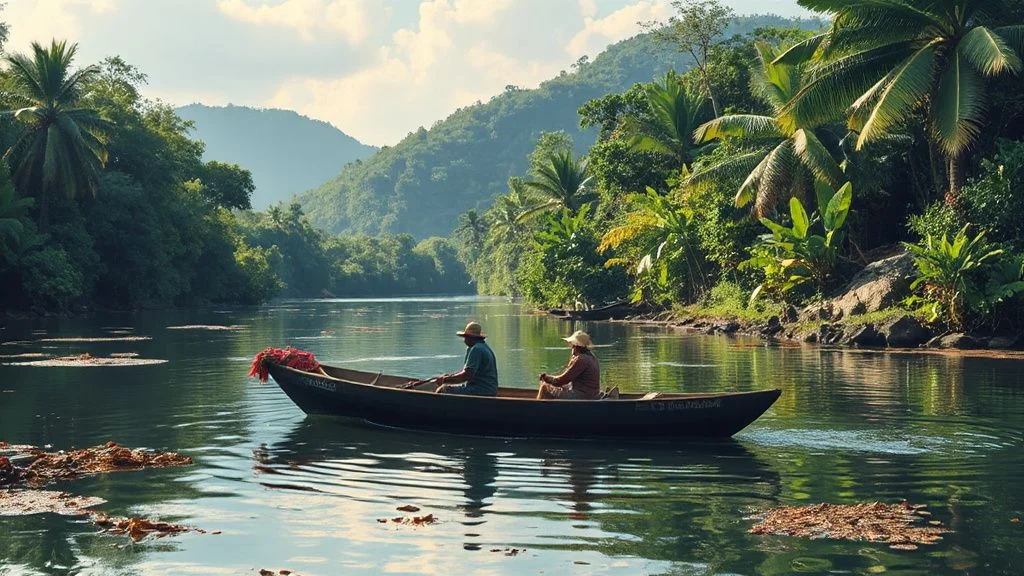
The Coppename River is one of the most important waterways in Suriname, crossing one of the most untouched areas of the country. This river, which rises in the mountainous areas of the interior and reaches the sea at the Atlantic Ocean, plays a central part in the life of local communities, particularly where fishing is concerned. In this article we look more closely at the ecology of the Coppename and the various fish species caught there, as well as the cultural and economic impact of this activity on residents.
The Geography of the Coppename
The Coppename River is one of the largest rivers in Suriname. It flows through various kinds of landscape, from tropical rainforest to marshy areas, which contributes to rich biodiversity. The river is surrounded by a lush ecosystem that is important not only for the flora and fauna but also for the people living along its banks.
Visitors can reach the river through a combination of roads and boat trips. That makes it feasible for tourists to experience the distinctive culture and way of life of the local population.
Fishing and Local Communities
For the residents of the Coppename River, fishing is not only a source of food but also an important economic activity. Many families depend on the catch for their daily living. The species caught range from small freshwater fish to larger sport fish, which also attract tourists. The fishing methods are traditional and often involve the use of nets and rods, deployed with care in order to protect local fish populations.
Local people catch a variety of species, including the popular lau lau, a fish known for its tasty flesh. There are also other notable species such as redtail catfish, leopard catfish, peacock bass and payara, each of which has its own place in local cooking. Catching these fish calls for knowledge of the seasons and of the best techniques, which are often passed down from generation to generation.
The Cultural Significance of Fishing
Fishing on the Coppename River has economic significance and is also deeply rooted in the culture and traditions of local communities. Many rituals and festivities are connected with fishing, with the community coming together to celebrate their catch. At these events traditional dishes are often prepared with the freshly caught fish, which contributes to social cohesion within the community.
Knowledge of fishing and the techniques used form an essential part of residents' identity. It is not unusual for families to fish together, which is an occasion for social interaction and also for teaching the younger generations. That strengthens the bond with the natural world and the traditions around them.
The Ecology of the Coppename
The Coppename River and its surroundings are rich in biodiversity. The ecosystem is home to countless fish species, as well as other animals such as birds, reptiles and mammals. Water quality and biodiversity are under threat from various factors, however, including illegal fishing and pollution. That has led to concerns about the sustainability of fishing in the region.
Many local residents are aware of these challenges and are taking measures to protect fish populations. There are efforts to promote sustainable fishing practice, with the emphasis on preserving local ecosystems. That matters, not only for fish stocks but also for the health of the communities that depend on these resources.
Fish Species and Their Habitat
The fish caught in the Coppename River varies depending on the time of year and the particular conditions of the river. In the dry seasons, when the water level falls, different species can often be caught than in the wet seasons. Residents have to adapt to these seasonal changes in order to make the most of their catch.
The payara, for instance, is a fish often found in the river's currents and known for its sharp teeth and powerful fighting style. The redtail catfish, by contrast, is often found in the quieter stretches of the river and is a popular choice for local fishermen and tourists alike. This variety of species makes the Coppename attractive to sport anglers looking for a challenging catch.
Practical Tips for Tourists
For visitors to the Coppename River there are various ways to experience the local fishing culture. It is advisable to engage a local guide, who knows not only the best fishing spots but also the customs and traditions of the community. That can be a distinctive chance to learn more about the local culture and the ecology of the river.
It is also important to prepare properly. Make sure you bring suitable fishing equipment or that you can rent it from local operators. Allow for local fishing regulations and respect the methods used by local people. That is central to safeguarding the sustainability of fish stocks and supporting the community.
Safety and Sustainability
When fishing on the Coppename River it is important to put safety first. Make sure you always travel in a group and let someone know where you are going. Bring plenty of water and food as well, along with protection against insects, since the tropical climate invites pests. Be alert to weather conditions too, particularly during the rainy season, when the river can rise quickly.
Where sustainability is concerned, fishing responsibly is essential. Follow the guidance of local communities and take no more than you need. That helps not only to maintain fish populations but also shows respect for local traditions and for the people who have depended on these resources for generations.
Conclusion
The Coppename River is not only a place of natural beauty but also a vital source of life for local communities. Its rich biodiversity and the various fish species found here make it a fascinating destination for anglers and for travellers wanting to experience the local culture. By acting thoughtfully and responsibly, visitors can contribute to preserving this fine environment and support the distinctive traditions of its residents.