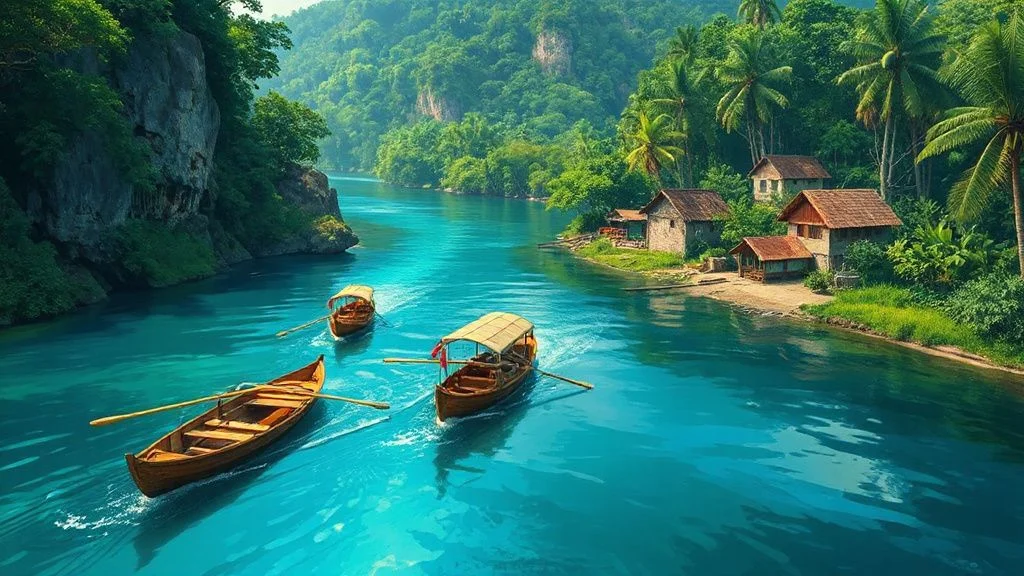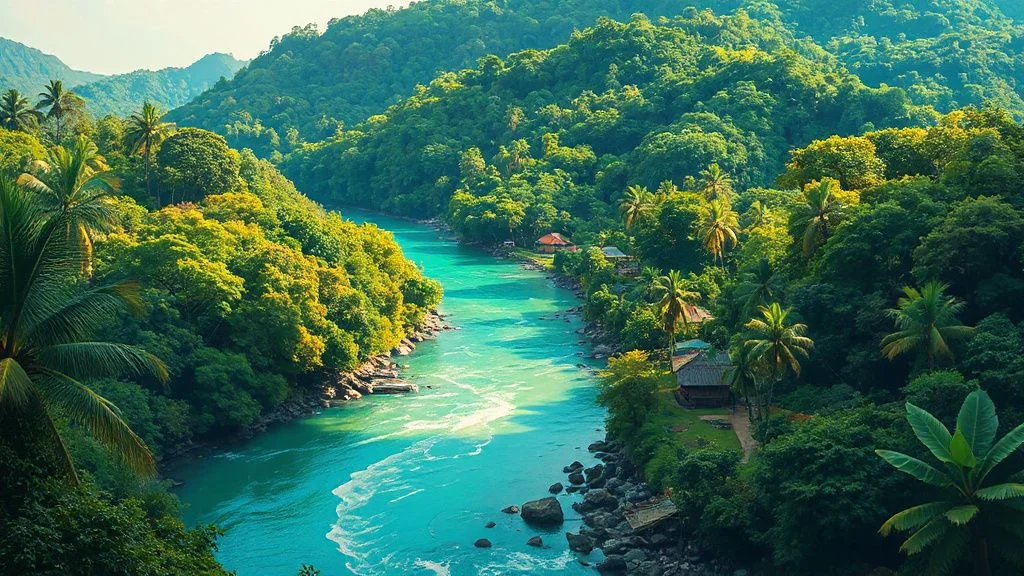
The Corantijn River, one of Suriname's most important rivers, offers not only a striking natural landscape but also a rich cultural and historical past. This article looks at the part the Corantijn played in the development of the region, the places that grew up along this majestic waterway, and offers practical tips for travellers wanting to explore these areas.
The Corantijn River: An Overview
The Corantijn River, also known as the Courantyne, runs for about 724 kilometres and forms the border between Suriname and Guyana. The river rises in the Acarai mountain range in Guyana and flows north to the Atlantic Ocean. The river is not only a natural border but also a lifeline for local communities. The Corantijn plays a central part in the region's ecosystem, where a variety of flora and fauna thrives along the banks, which makes it a popular destination for ecotourism.
Geographical and Ecological Features
The Corantijn River runs through a tropical rainforest climate, which means temperatures sit at around 27-30°C all year round. The river is surrounded by dense forest, which provides shelter for a wide range of animals, including fish, birds and reptiles. This biodiversity makes the area attractive to nature lovers and adventurous travellers. There are various options for boat trips and eco-tours that put the area's fauna and flora in the spotlight.
The Historical Significance of the Corantijn
Historically the Corantijn River was essential to the development of Suriname's plantation economy in colonial times. The river served as an important transport route for goods and other agricultural products. Numerous historic plantations and villages grew up along the banks of the Corantijn. These places are important not only for their economic contribution but also for their cultural and social impact on the region.
Places along the Corantijn
Various villages and historic sites are found along the Corantijn, each with its own stories and attractions. Below we look at some of the most significant places along the river.
Apoera
Apoera is a small village on the Corantijn in Suriname. It is a point of access for visitors wanting to explore the river and the natural surroundings around it. Apoera is known for its welcoming community. It is an excellent place for adventurous activities such as fishing, canoeing and walks through the rainforest. Local people often offer guided tours that give insight into the traditional way of life and culture of the indigenous residents.
Nieuw Amsterdam
Nieuw Amsterdam is of considerable historical significance. Visitors can explore the historic centre, which still reflects the colonial architecture. There are also museums that document the history of the region and tell of the impact the plantations had on the local population.
Access and Getting There
The Corantijn River and the villages around it can be reached by various means of transport. The most common way to reach the region is through Paramaribo, Suriname's capital, where Johan Adolf Pengel International Airport (PBM) is located. From there travellers can rent a car or use local taxis to travel to the villages along the Corantijn. Bear in mind that the roads can sometimes be in poor condition, particularly during the rainy season.
River Trips
A popular way to explore the Corantijn is by boat. Various operators offer river trips that give visitors the chance to experience the natural beauty of the river and the surrounding areas. These trips range from short excursions to multi-day adventures, with overnight stays in local lodges or on boats. It is advisable to book in advance, particularly in the high season, when demand for these activities rises.
Safety Considerations
When exploring the Corantijn and the surrounding areas it is important to weigh up a few safety considerations. Although most villages are safe for visitors, it is advisable always to travel with a local guide, particularly in remote areas. It is also wise to be aware of the natural environment, including the weather and the possible presence of wild animals. Bring plenty of insect repellent and make sure you have suitable clothing for the tropical conditions.
Practical Tips for Travellers
Here are some insider tips to make your visit to the Corantijn and the villages around it as pleasant as possible:
- Local guides: Consider hiring a local guide to show you around. They often have valuable knowledge of the region's history, culture and natural surroundings.
- Accommodation: Book your accommodation in advance, particularly during the high season. Villages such as Apoera offer various options, from simple lodges to more comfortable stays.
- Cultural events: Try to plan your visit around local festivals or events for an authentic experience of Surinamese culture.
- Health and safety: Bring the necessary vaccinations and medication, particularly for travel to remote areas. It is also sensible to carry a first aid kit.
- Respect for nature: Be environmentally aware and respect the local flora and fauna. Do not leave waste behind and follow your guide's instructions.
Conclusion
The Corantijn River and the places along its banks form a fascinating and varied area rich in history, culture and natural beauty. Whether you are interested in ecotourism, local history or simply want to enjoy the fine landscape, the Corantijn has something for everyone. With the right preparation and respect for local traditions and the environment, a visit to this region will be an unforgettable experience.