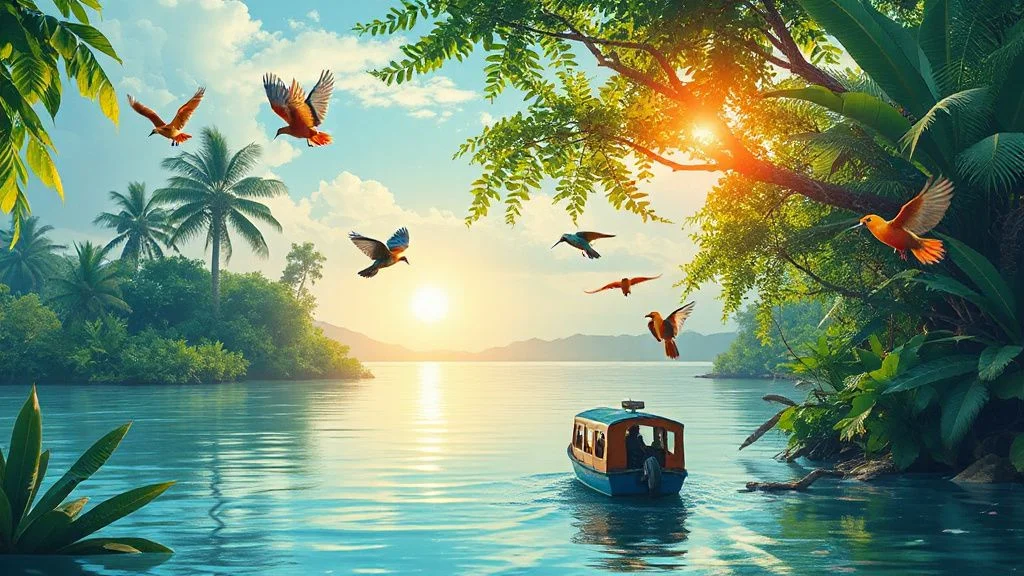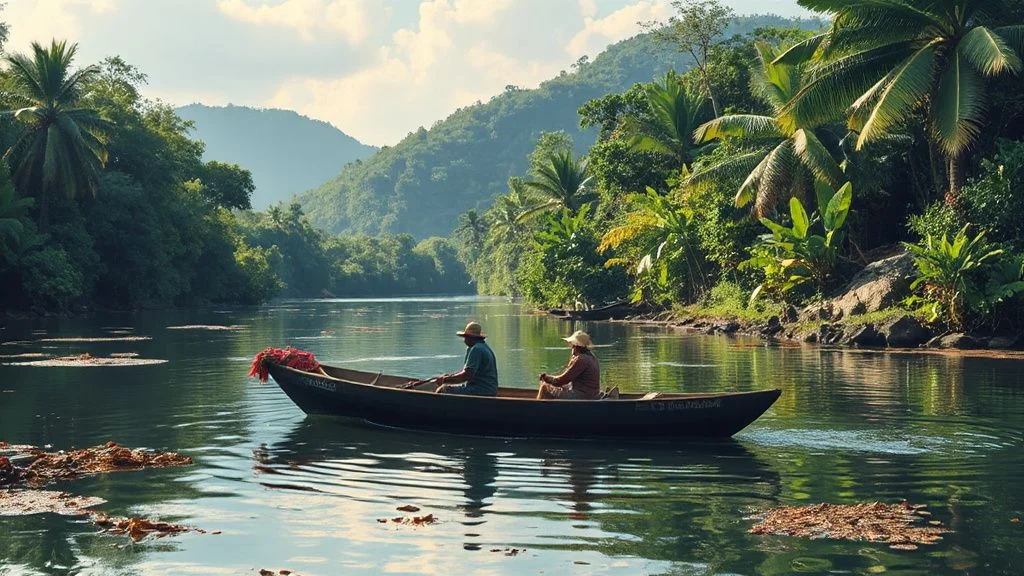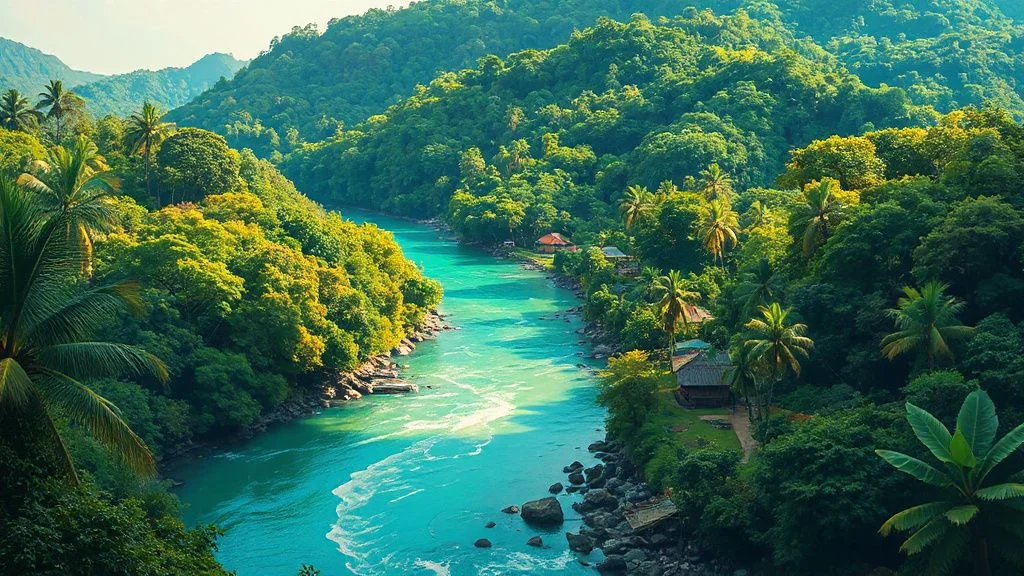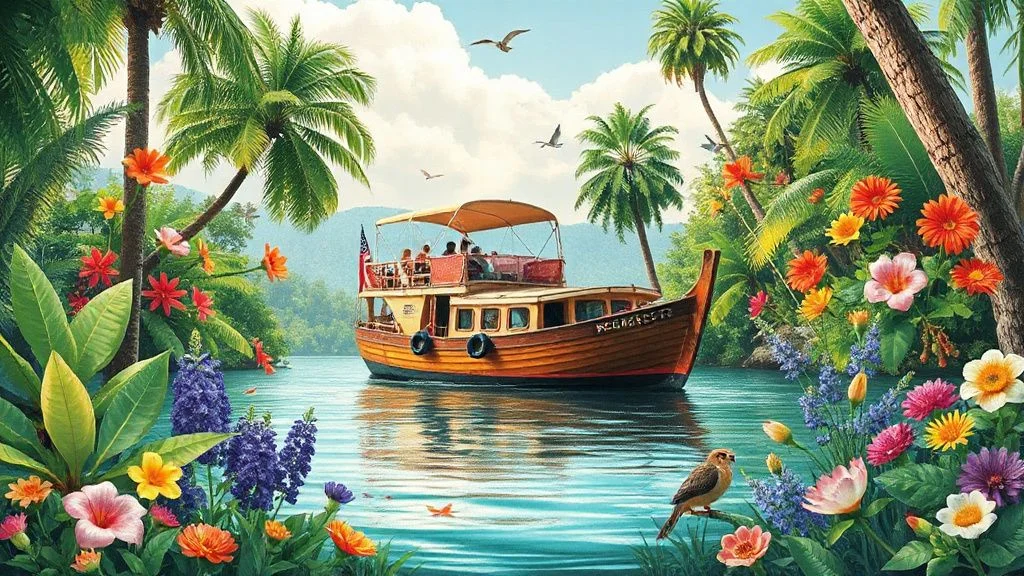
The Commewijne River, one of the most important rivers in the north of Suriname, offers a distinctive view of the nature and culture of this fine country. From its rich biodiversity to the historic plantations and authentic villages, this river has a great deal to offer travellers and local people alike. In this article we look at what you can expect along the banks of the Commewijne River and offer practical tips for an unforgettable experience.
The Geography of the Commewijne River
The Commewijne River rises in the interior of Suriname and flows towards the Atlantic Ocean, where it meets the Suriname River at Nieuw-Amsterdam. This river plays an important part in the ecosystem of Suriname's northern coastal area. The area around the Commewijne River is largely covered in tropical rainforest, which makes for rich biodiversity.
Along the banks you will find various species of flora and fauna, including rare birds and colourful butterflies. It is a genuine paradise for nature lovers and photographers. The river also serves as an important waterway for the local population, which makes it central to how many communities make a living.
Access and Transport
To reach the Commewijne River it is best to set out from Paramaribo. That is easy to reach by car or taxi. There are also various local tour operators offering day trips along the Commewijne River. A popular option is a boat trip, where you can admire the natural surroundings and also enjoy the local culture.
Boat trips are generally well organised and can range in length from a few hours to a full day. It is advisable to book in advance, particularly during the high season. Make sure you check what the boat offers, such as food and drink, and whether there are guides on board who can tell you more about the area.
What You Will Come Across on the Banks
The banks of the Commewijne River are rich in history and culture. You pass various plantations that once played an important part in Suriname's sugar production. Many of these plantations have now been restored and serve as museums where visitors learn more about the colonial history and the part played by the indigenous population and enslaved labourers.
Here you will find impressive architecture and well-preserved buildings that offer a view of the past. Visitors can join guided tours and tastings of local produce, which makes for a deeper appreciation of Surinamese culture.
Biodiversity and Natural Beauty
Along the banks of the Commewijne River you will find an abundance of flora and fauna. The tropical rainforests are home to countless plant and animal species, including monkeys, sloths and a variety of birds such as the famous toucan. Do not forget to bring your binoculars for a better look at these fine animals.
You are less likely to meet heavy rainfall during certain periods of the year, which means you can spend more time outdoors. It is also important to be prepared for the heat, however; bring plenty of water and wear light, breathable clothing.
Culture and Communities
Various communities live along the Commewijne River, each with its own distinctive culture and traditions. Visiting these villages offers insight into the local way of life and the customs of the Surinamese population. You can take part in cultural activities, such as traditional dances and craft workshops.
One popular destination is the village of Nieuw-Amsterdam, where you have the chance to meet local people. There are often markets where you can buy handmade goods such as textiles and jewellery. These products are not only distinctive but also support the local economy.
Safety and Precautions
Although the Commewijne River is generally safe to explore, it is important to take precautions. Avoid travelling in remote areas without a guide, particularly if you are not familiar with the surroundings. Ask about any health risks as well, such as mosquitoes, and use insect repellent.
It is also advisable to keep valuables safely stored and not to carry too much cash while exploring. Follow local customs and respect the culture of the communities you visit.
Practical Tips for Visitors
If you plan to visit the Commewijne River, here are some practical tips to improve your experience:
- Book in advance: Make sure you book your boat trip or excursions in advance, particularly during the high season.
- Bring plenty of water and snacks: It can get hot on long trips, so make sure you stay hydrated.
- Respect nature: Do not leave waste behind and respect the animals and plants you come across.
- Learn a few local words: Learning a few basic words in Sranantongo or Dutch can help when dealing with local people.
- Be prepared for the weather: Make sure you bring rainwear or a poncho, particularly if you travel during the rainy season.
Conclusion
The Commewijne River is more than just a waterway; it is a window onto Suriname's rich culture and biodiversity. From historic plantations to lively communities and lush natural surroundings, this region offers a distinctive experience for every traveller. By preparing well and respecting local customs, you can make the most of what this fine river and its banks have to offer.
Primary Sources
Last updated: November 2026