When visiting or living in Suriname, understanding the role of security guards at private gates is essential for ensuring safety and security. These guards play a crucial role in protecting properties, managing access, and maintaining a secure environment. This article will delve into the requirements and expectations for security guards stationed at private gates, providing practical insights for both residents and travelers.
Understanding the Role of Security Guards
Security guards at private gates are responsible for monitoring and controlling access to properties, ensuring that only authorized individuals enter. Their duties typically include checking identification, monitoring surveillance cameras, and responding to security breaches. In Suriname, where safety can be a concern, the presence of a vigilant security guard can provide peace of mind to residents and visitors alike.
In addition to access control, security guards are often tasked with patrolling the premises, conducting regular checks, and maintaining a visible presence to deter potential threats. Their role is not just reactive; it is also proactive, as they are trained to identify suspicious behavior and take appropriate action before incidents occur.
Training and Qualifications
In Suriname, security guards are typically required to undergo training to be effective in their roles. This training often includes courses on emergency response, conflict resolution, and basic first aid. Guards must also be familiar with Surinamese law on security and privacy, which is national: it does not change from one part of the country to another.
While formal education may not be a strict requirement, many employers look for candidates with a high school diploma or equivalent. Additionally, prior experience in security or law enforcement can be advantageous. Some security companies in Suriname may offer their own training programs, ensuring that their guards are well-prepared for the challenges they may face.
Essential Equipment and Uniform
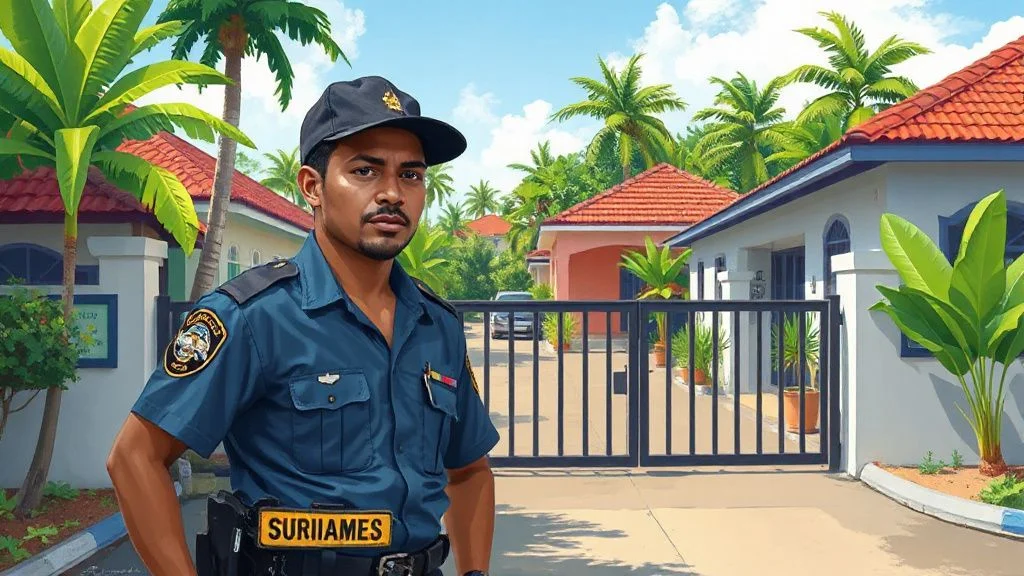
Security guards at private gates are typically equipped with various tools to help them perform their duties effectively. A standard uniform not only enhances their professional appearance but also serves as a deterrent to potential intruders. The uniform usually consists of a shirt, pants, and a jacket, often featuring the company’s logo for easy identification.
In terms of equipment, guards may carry communication devices such as radios or mobile phones to stay in contact with their team and report incidents promptly. Some may also have access to surveillance equipment, such as cameras or monitoring systems, to keep an eye on the property. Additionally, personal safety gear, like flashlights and first aid kits, is often part of their essential equipment.
Legal Requirements and Regulations
Which permit a security company needs, and whether its guards are entered in a register, could not be established for this article, so it states neither. What you can ask for is concrete: let the company show the permit it works under and explain how it screens its staff, and let it point to a document rather than to a practice.
Employers remain responsible under Surinamese law for the people they post at their gate, so put the screening, the hours and the reporting line in the written agreement with the company. Ask which permits the company holds for operating a security service and keep a copy; that is the record you will need if something goes wrong.
Practical Considerations for Hiring Security Guards
When considering hiring security guards for a private gate, it is essential to evaluate several factors to ensure you are making an informed decision. Start by assessing the specific security needs of your property. Consider the size of the area that needs monitoring, the level of access control required, and whether additional services, such as patrols, are necessary.
Next, research local security companies that specialize in providing guards for private properties. Look for companies with a solid reputation and positive reviews from previous clients. It can be beneficial to ask for recommendations from other residents or expatriates who have experience with security services in Suriname.
Once you have identified potential providers, schedule meetings to discuss your needs and expectations. During these meetings, inquire about the training and qualifications of their guards, the equipment they use, and their approach to security. This will give you a better understanding of how they operate and whether they align with your security requirements.
What Expats Should Know
For expatriates living in Suriname, understanding the local security landscape is crucial. It is common for residential areas to have private security measures in place, including gated communities with security guards at entrances. Familiarizing yourself with these practices can help you feel more secure in your new environment.
Additionally, it is important to adapt to local cultural nuances regarding security. In Suriname, it is not uncommon for security guards to be friendly and approachable, often greeting residents and visitors. Building a rapport with your security personnel can enhance your overall sense of safety and create a more welcoming atmosphere.
Moreover, be aware that the security landscape can vary significantly between urban and rural areas. Understanding these differences can help you make informed decisions about your security needs.
Conclusion
Security guards at private gates in Suriname play a vital role in ensuring the safety and security of properties. By understanding their training, qualifications, and the equipment they use, residents and expatriates can make informed decisions when hiring security services. It is essential to research local providers, verify their credentials, and consider the specific security needs of your property. By taking these steps, you can enhance your sense of security and enjoy your time in Suriname with confidence.
Last updated: November 2026