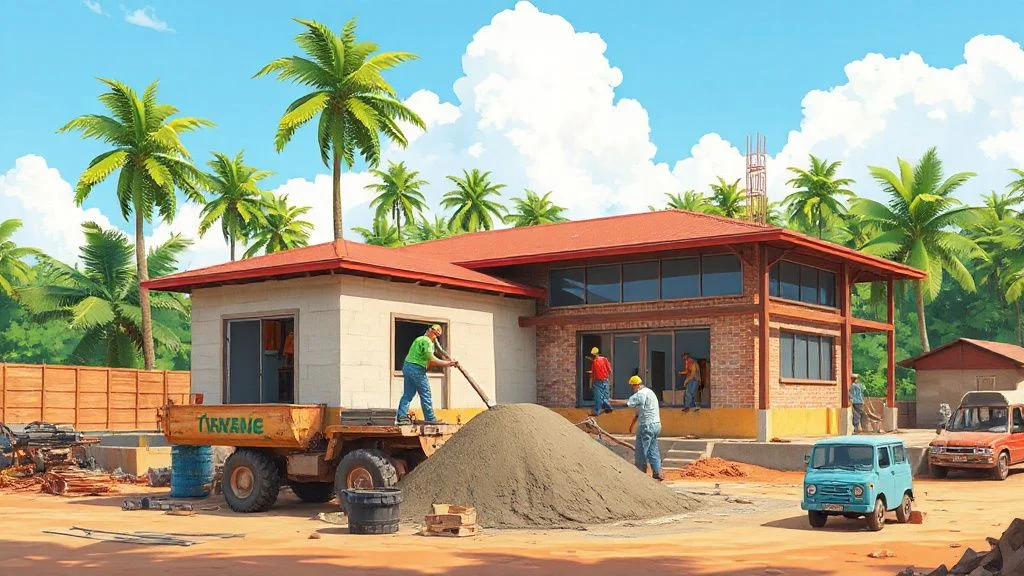
Building an extension in concrete is a significant undertaking that requires careful planning, the right materials, and skilled labor. Whether you're a contractor or a homeowner looking to expand your living space, understanding what is needed for a concrete extension can help ensure a successful project. This article will cover the essential requirements, including materials, tools, and practical advice for contractors working in Suriname.
Understanding Concrete as a Building Material
Concrete is a popular choice for building extensions due to its durability, strength, and versatility. It can withstand the tropical climate of Suriname, where humidity and rainfall are common. Contractors must understand the different types of concrete available, such as ready-mix concrete, which is pre-mixed at a plant and delivered to the site, and site-mixed concrete, which is mixed on-site according to specific project requirements.
Types of Concrete
Ready-mix concrete is often preferred for larger projects due to its consistency and quality control. It is delivered in a truck and can be poured directly into forms. Site-mixed concrete, on the other hand, allows for more customization, as contractors can adjust the mix based on specific needs. However, it requires more labor and skill to ensure the mix is correct.
Concrete Mix Ratios
Understanding concrete mix ratios is crucial for achieving the desired strength and durability. Contractors should verify the appropriate mix ratios based on the project specifications and local building codes.
Essential Materials for Concrete Extensions
Contractors need to source various materials to successfully build a concrete extension. These materials include cement, aggregates, water, and additives that enhance the properties of concrete.
Cement and Aggregates
Cement is the binding agent in concrete, and its quality significantly affects the final product. Contractors should choose high-quality cement suitable for construction. Aggregates, such as sand and gravel, should be clean and free of impurities to ensure a strong mix. Local suppliers can provide these materials, but contractors should verify the quality and suitability for construction.
Water and Additives
Water is a critical component of concrete, as it activates the cement and allows for the curing process. Contractors should use clean, potable water to avoid contamination. Additionally, various additives can be used to improve the performance of concrete, such as plasticizers for workability and retarders to delay setting time in hot weather. Contractors should consult with suppliers to determine the best additives for their specific project needs.
Tools and Equipment Required
Having the right tools and equipment is essential for contractors when building a concrete extension. The following tools are typically required:
Mixing Equipment
For site-mixed concrete, contractors will need a concrete mixer to ensure a uniform mix. For larger projects, a truck-mounted mixer may be necessary. Ready-mix concrete eliminates the need for mixing equipment but requires a means to transport and pour the concrete effectively.
Formwork and Finishing Tools
Formwork is crucial for shaping the concrete during the pouring process. Contractors typically use wooden or metal forms to create the desired shape. Once the concrete is poured, finishing tools such as trowels, floats, and screeds are needed to achieve a smooth surface. Proper finishing is essential for both aesthetics and durability.
Planning and Preparation
Before starting construction, contractors must plan the project carefully. This includes obtaining necessary permits, conducting site assessments, and preparing the site for construction.
Permits and Regulations
In Suriname, contractors must adhere to local building codes and regulations. This often involves obtaining permits from local authorities before commencing work. Contractors should familiarize themselves with these requirements to avoid delays and ensure compliance.
Site Assessment and Preparation
A thorough site assessment is essential to identify any potential challenges, such as soil conditions and drainage issues. Contractors should prepare the site by clearing debris, leveling the ground, and marking the layout of the extension. Proper preparation helps prevent future problems and ensures a solid foundation for the concrete extension.
Concrete Pouring and Curing Process
The pouring and curing process is critical to the success of a concrete extension. Contractors must follow specific steps to ensure the concrete sets properly and achieves its intended strength.
Pouring Concrete
When pouring concrete, contractors should work quickly to avoid premature setting. It's essential to pour the concrete in manageable sections and use vibrators to eliminate air pockets, ensuring a dense and strong final product. Proper pouring techniques can significantly impact the durability and longevity of the extension.
Curing Concrete
Curing is the process of maintaining adequate moisture, temperature, and time to allow the concrete to achieve its desired strength. In the tropical climate of Suriname, contractors should cover the concrete with wet burlap or plastic sheeting to retain moisture. Curing should be conducted for a sufficient duration, during which the concrete should be kept damp to prevent cracking and ensure optimal strength development.
Practical Tips for Contractors
Contractors working on concrete extensions in Suriname should keep the following practical tips in mind:
Weather Considerations
The tropical climate can pose challenges, particularly during the rainy season. Contractors should monitor weather forecasts and plan pours during dry periods to avoid complications. Additionally, using additives that enhance workability can help manage the effects of heat and humidity on the curing process.
Local Resources and Suppliers
Building strong relationships with local suppliers can streamline the procurement of materials and equipment. Contractors should explore options for sourcing high-quality concrete materials and tools from reputable suppliers in Suriname. Networking with other contractors can also provide valuable insights and recommendations.
Conclusion
Building a concrete extension requires careful planning, the right materials, and skilled labor. Contractors must understand the properties of concrete, source quality materials, and use appropriate tools to ensure a successful project. By adhering to local regulations, preparing the site thoroughly, and following best practices for pouring and curing, contractors can create durable and aesthetically pleasing extensions that enhance living spaces in Suriname.
Last updated: November 2026