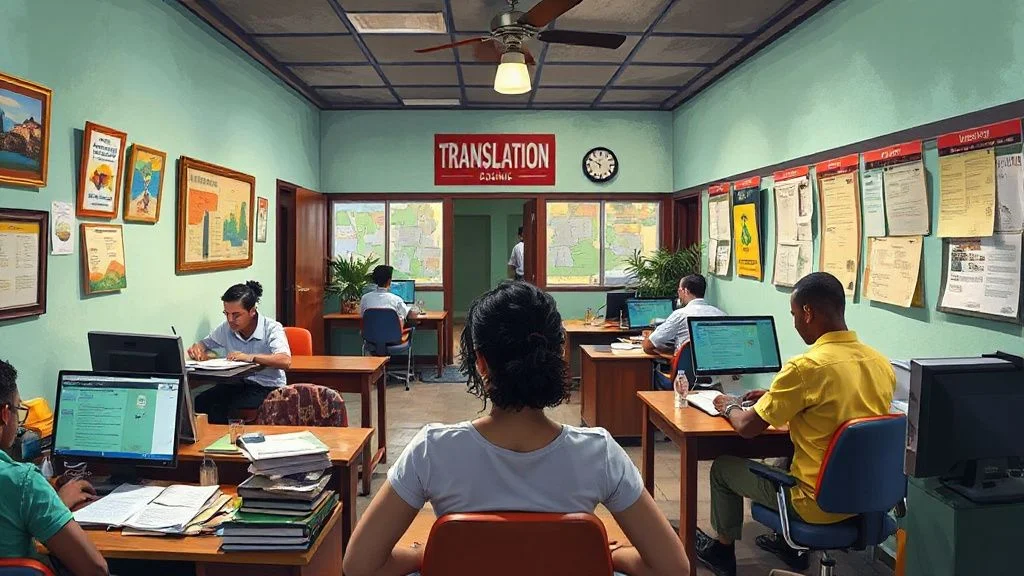
Judging a translation office for legalised documents is mostly a matter of knowing which step belongs to whom. In Suriname the translation, the sworn signature on it and the legalisation itself are three separate things handled by three different parties, and an office that blurs them is either confused or selling you something you do not need. This article sets out who does what, and what to ask before you hand over a document.
What legalisation actually means here
Suriname issues apostilles, the short form of legalisation used between countries that accept it. The authority that issues them is the registrar of the Hof van Justitie in Paramaribo, the Court of Justice. That matters, because a translation office cannot issue an apostille and no amount of extra fee will change that. What an office can reasonably do is prepare your document so that the registry accepts it, and tell you honestly where its own part ends.
The second thing worth understanding is what a legalisation certifies. It confirms that a stamp or a signature on the document is genuine. It says nothing whatsoever about whether the contents are correct or whether the underlying document is authentic. An office that implies a legalised translation is somehow officially verified as accurate is overselling, and that is a useful tell.
When you need a sworn translator
A document that is not in Dutch, English, German or French has to be translated by a sworn translator, a beedigd vertaler. The sworn status attaches to the person, not to the firm, so the question to ask is not whether the office works with sworn translators in general but which sworn translator will sign your document. A firm that cannot name them before the work starts is subcontracting blind.
Ask too whether your receiving authority wants the translation itself legalised, on top of the original. That requirement varies by the body asking for the document, and it is the single most common cause of a second trip to the registry. A competent office will tell you to check with the receiving party rather than guess for you.
Exemptions worth knowing before you pay
Original civil registry certificates issued before 25 November 1975, Suriname's independence date, are exempt from legalisation. If your document falls in that category you may need a translation but not the legalisation step, and an office that charges you for arranging one has either not checked or is not telling you.
Documents issued by a Surinamese consulate are a separate case: they do not receive an apostille but a different form of legalisation. Knowing which category your document falls into before you commission anything saves both money and a wasted journey.
Questions that separate a good office from a plausible one
- Which sworn translator will sign my translation, and can I have their name in advance?
- Does my document need an apostille from the registry of the Hof van Justitie, or is it exempt?
- Does the receiving authority want the translation legalised as well as the original, and have you asked them or are you assuming?
- What exactly is included in your fee, and which part of it is a government charge you pass on rather than your own work?
- What happens, and at whose cost, if the registry refuses the document?
On fees
Treat any amount quoted to you in an article, including this one, as unreliable. The only published tariff that turns up for apostilles in Suriname sits in legislation from 2001 and is denominated in a currency that no longer exists, which tells you how far such figures can drift. Ask the registry for the charge in force on the day, and ask the office separately what it charges for its own work, so you can see which is which.
In short
A translation office translates and arranges a sworn signature. The registrar of the Hof van Justitie legalises. The receiving authority decides what it will accept. Judge an office on whether it describes that division clearly and sends you to the right party for the parts that are not its own, because the ones that do are also the ones that will not quietly charge you for a step you did not need.
Last updated: November 2026